
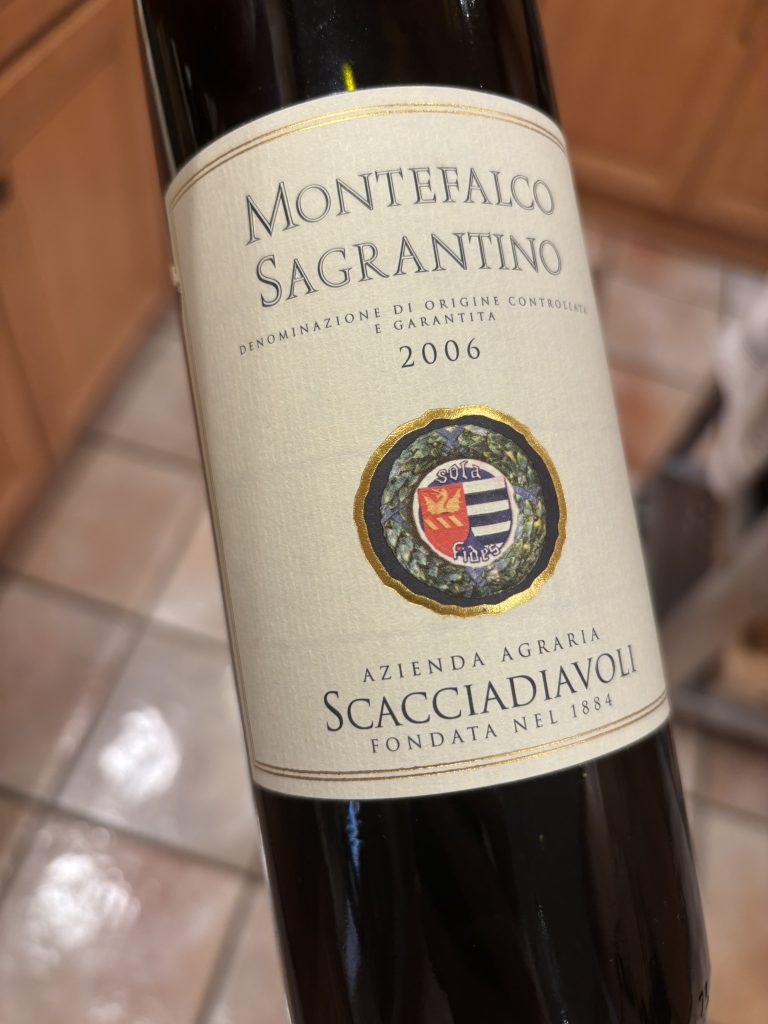
Two weeks ago I posted about how wonderful aged wine can be and the benefit of tucking a few bottles aside each year to enjoy in the future. Most of the time I am delighted with the experience of enjoying a wine that has matured, but occasionally there are disappointments. A case in point is the wine above, which has been in my cellar for at least a decade and when I recently decided to open it discovered it was corked.
The moment I poured the wine into a decanter I smelled the tell-tale sign of wet cardboard and knew my efforts were a waste. This phenomenon is due to a cork that was somehow improperly sterilized during the production process. As a result a microorganism that metabolizes alcohol creates as a byproduct a compound called 2,4,6-Trichloroanisole (TCA), aka cork taint. Once you know the smell it is hard to miss, thankfully it is less common than it once was.
At the turn of the century it was estimated that 10% of all the wines suffered cork taint. Thanks to better manufacturing processes, and the rise of alternative closures, it is now estimated that between 1-3% of all bottles now are afflicted with this problem. At TWM we open roughly 50 bottles a week between vendor appointments and our own tastings, and we estimate the percentage close to 1%. Still, it is frustrating when you have cellared a wine through 2-3 Presidential terms only to discover it was bad all along.
Despite some internet solutions I find there really is no remedy for cork taint. The smell also does not dissipate over time, so even a few days later it is easy to detect. If you bought the bottle recently from TWM you can return it for another, however we cannot replace bottles you have tucked way for a few years in the cellar, that is just the luck of the draw. I am not sure how the big box retailers handle the situation if they even know. Also, cork taint is unique to that cork so even other bottles shipped in the same case are rarely affected.